
Get a FREE digital
copy of Renovate Handbook!
Just sign up to our newsletter and we'll send it your way.
Get Renovate HandbookWhen Your Home No Longer Fits: One-Bed to Two-Bed Flat Conversions in London
Growing family but don't want to move? See how one London couple turned a cramped one-bed flat into a two-bed, and added £150k in value.

Your home made perfect sense when you moved in. But life moves fast, and suddenly the flat you loved is full of toys in corners it was never designed for, a makeshift desk in the living room, and a bedroom doing the work of three rooms at once.
So what do you do? Move, or renovate?
It's one of the most common questions we hear from homeowners across South West London, and the answer isn't always what people expect. Areas like Clapham, Battersea, Wandsworth and Putney are full of period conversions and mansion flats with generous proportions and high ceilings, and many of them have far more potential than their current layout suggests.
To show you what's really possible, here's a Refresh Renovations® project completed in central London last year: a transformation that started with a cramped one-bedroom flat and ended with something remarkable. The approach, and the lessons, apply just as well to flats in Balham, Fulham or Wimbledon.
Should You Move or Renovate?
Natasha and Daniel had lived in their one-bedroom flat for over a decade. They loved it: the area, the flat itself, the schools nearby. But their young child had grown into a toddler, and the space simply wasn't working anymore. Everyone was sharing one bedroom. Toys were everywhere. There was no separation between living space and workspace, and storage was almost non-existent.
The obvious solution for most people would be to move. But Natasha and Daniel didn't want to leave. And when you factor in stamp duty, legal fees, surveying costs, removals and the sheer time involved in moving, the financial case for staying and renovating becomes compelling very quickly. In South West London, where stamp duty alone on a family-sized property can run well into five figures, that maths is hard to ignore.
The question was: could their flat actually be transformed into something that worked for a growing family?
Why Every Flat Conversion Starts with a Feasibility Study
Before any designs were drawn up, we ran a feasibility study. This is always the first step on a project of this scale, and it's worth explaining why.
A feasibility study brings together a designer and project manager to assess whether your goals are achievable: practically, design-wise, and financially. For Natasha and Daniel, this threw up two important things early on.
First, creating a second bedroom in a flat isn't simply a matter of building a wall. There are minimum space requirements (6.5 square metres to legally market a room as a bedroom), fire safety considerations around separating kitchens and hallways, and questions about whether the resulting layout would actually be liveable. Fortunately, their flat had generous proportions and high ceilings, both of which opened up creative possibilities. The same is true of many Victorian and Edwardian conversions across South West London.
Second, and more unexpectedly, the building was Grade II listed. This changed the project significantly. Internal reconfigurations in a listed building require listed building consent from the local council, and the contractors and architect involved need specific experience with listed properties. Get this wrong and you can find yourself ordered to reinstate removed features at considerable cost when you come to sell. With conservation areas covering large parts of Wandsworth, Richmond and Merton, this is a check worth making early on any South West London project.
It was a curveball, but not an insurmountable one.
Converting a One-Bed Flat into a Two-Bed: The Design Solution
Once feasibility was confirmed and the right professionals were in place, the design work began in earnest. The key insight was this: Natasha and Daniel had a large open-plan kitchen and living area. The kitchen could be relocated to one side of that space, freeing up the original kitchen footprint to become the new second bedroom.
A lobby area was created to provide proper separation between the spaces and satisfy fire safety requirements. The partitioned wall featured a sliding fire-rated door with glazing at the top, keeping light flowing through both sides of the flat. The living area remained spacious even with the kitchen repositioned.
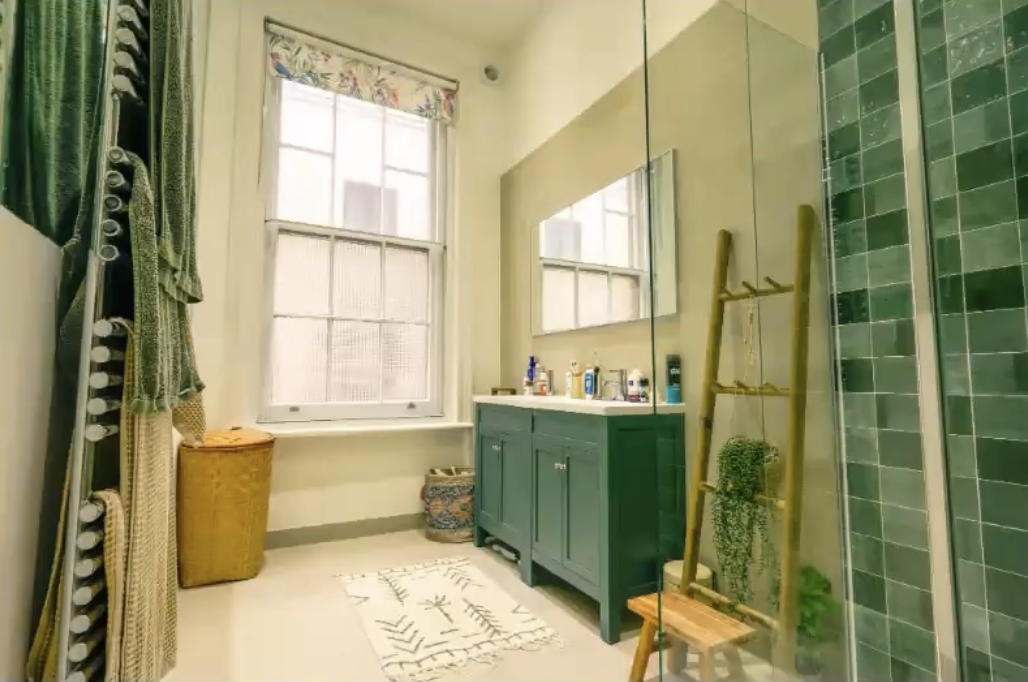
The project also became an opportunity to modernise the rest of the flat: the bathroom was reconfigured and updated, a step removed, and the whole property brought up to a standard that matched the quality of the new layout.

How Much Value Does a Flat Conversion Add?
Against an investment of around £80,000, Natasha and Daniel added approximately £150,000 in value to their property. The flat went from a one-bed to a two-bed, and everything was finished to a standard they'd struggled to find in properties on the open market.
More importantly, they didn't have to leave a home they loved.
Smart Renovation Options for South West London Homes
Every property is different, but several renovation routes consistently deliver value for growing families across South West London:
Loft conversions remain one of the most effective ways to add a master suite or children's bedroom without touching the existing footprint. The Victorian terraces of Wandsworth, Balham and Tooting are particularly well suited to them.
Rear and side return extensions can dramatically open up ground floor living, and the side return is something of a South West London speciality: that narrow strip of wasted space alongside a terraced kitchen can become the heart of an open-plan family room.
Garage conversions are often underused. A single garage can become a home office, gym or teenage hangout with relatively modest investment.
Garden rooms and outbuildings offer flexible, multipurpose space, and in most cases avoid planning complexity.
Basement conversions add genuine living space and are increasingly popular in areas like Clapham and Fulham where land values justify the cost, though they require careful planning.
The right choice depends on your property, your goals and your budget, which is why the feasibility stage matters so much.

Why 30% of Renovation Budgets Get Wasted
Research into the home renovations market consistently shows that projects lose around 30% of their total budget on average. The three main culprits are inadequate planning, poor communication between parties, and a lack of active project management during the build.
The way to avoid this is simple: get the planning right upfront, make sure every decision about design, materials and finishes is locked in before construction starts, and have someone actively managing the project throughout the build, not just checking in occasionally.
This is exactly how we work at Refresh Renovations®. Our process runs from initial feasibility through to design, consents, costing and a fully managed build, with one point of contact throughout. It removes the gaps where costs and delays typically creep in.
Three Tips Before You Start Your Renovation
1. Start planning earlier than feels necessary. The earlier you get clarity on what you want to achieve, the more options you have, and the less you'll pay for changes made under pressure during construction.
2. Understand the full picture before you commit. A realistic view of costs and timelines upfront keeps your design ambitions aligned with your budget, so you're not making compromises halfway through.
3. Work with a single renovation partner. Coordinating separately between an architect, a QS and a contractor creates gaps in communication and accountability. A single partner managing the whole process from concept to completion reduces delays, controls costs and keeps quality consistent.
Frequently Asked Questions
Is it cheaper to renovate or move in London?
It depends on your property and goals, but the costs of moving are often underestimated. Stamp duty, legal fees, surveys, removals and estate agent fees can easily total tens of thousands of pounds before you've gained a single square metre. A well-planned renovation puts that money into your own home instead, and as Natasha and Daniel's project shows, it can add significantly more value than it costs.
What is the minimum size for a bedroom in the UK?
To legally market a room as a bedroom, it must be at least 6.5 square metres. This is one of the first things assessed in a feasibility study when you're looking to add a bedroom to a flat.
Do I need listed building consent to renovate a flat?
If your building is listed, yes: even internal reconfigurations like moving a kitchen or adding a partition wall require listed building consent from your local council. Carrying out work without it is a criminal offence, and you can be ordered to reverse the changes. Always check the listing status and any conservation area restrictions before planning work.
How much does it cost to convert a one-bed flat into a two-bed?
Costs vary with the property and the scope of work. The project featured here came in at around £80,000, which included relocating the kitchen, creating the new bedroom and lobby, and fully updating the bathroom. A feasibility study will give you a realistic cost picture for your own property before you commit to anything.
If you're wondering what your home could become with the right renovation, your local Refresh Renovations® South West London consultant would love to talk it through with you. Get in touch for a free, no-obligation consultation.
Read Next

%20(1).jpg)
All Refresh Renovations franchises are independently owned and operated.
Processing...

Talk to a renovation consultant today
If you would like to find out how Refresh Renovations can support you with a high quality, efficient home renovation, get in touch today. Your local Refresh Renovations consultant will be happy to meet with you for a free, no obligations consultation.