
Get a FREE digital
copy of Renovate Handbook!
Just sign up to our newsletter and we'll send it your way.
Get Renovate HandbookKnock-Through Walls: What’s Involved?
Knocking through an internal wall can transform your home into a brighter, open-plan space. This guide explains what’s involved in the UK, from structural checks and steel beams to Building Regulations and finishing work.
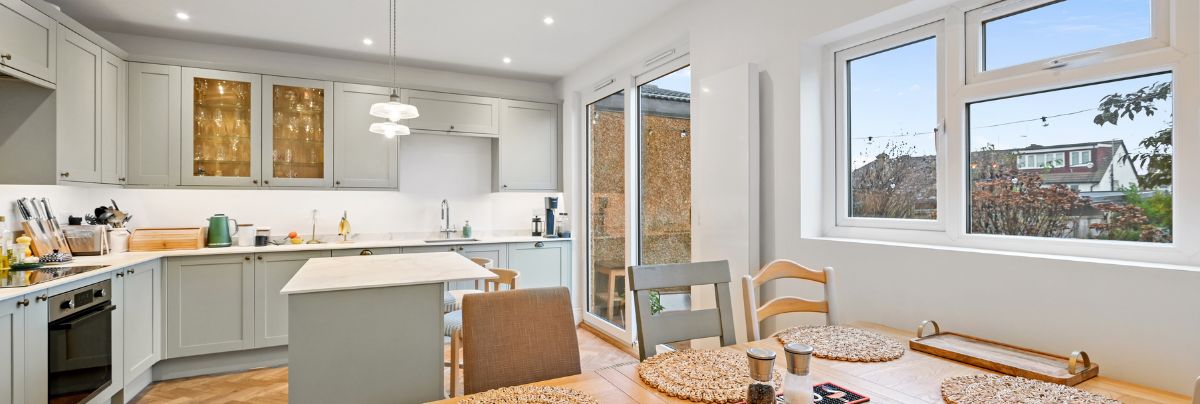
Do you ever look at two small, separate rooms and wish they were one bright, open space? Do you find yourself thinking, “If I could just knock this wall through, my home would feel so much bigger”? Creating an open-plan layout by knocking through internal walls is a popular way to modernise UK homes, improve light, and make spaces work better for everyday life. But it’s not as simple as picking up a sledgehammer and getting started. There are important structural checks, building regulations, and approvals to think about first.
Let’s go through what’s involved in knocking through walls in the UK.
What’s really involved in knocking through an internal wall in the UK?
When you remove an interior wall, you’re changing how your house works and how it stands. Here’s what you need to think about, in simple words.
- Is the wall holding anything up?
The first job is to determine whether the wall is load-bearing (supporting the floors or roof) or just a simple divider.
You usually can’t tell this properly just by looking. That’s why it’s important to get a structural engineer or other qualified professional to check the wall and tell you what it’s doing before you plan to remove it.
- You’ll probably need a beam and proper calculations
If the wall is load-bearing, you can’t just knock it out. The weight it was carrying has to go somewhere else. Normally, you’ll need:
- A steel beam or lintel to take the load
- Structural calculations from an engineer to show the right size and type of beam
- A clear plan for how the beam will sit and what it will rest on at each end
It is what keeps your home safe and stops sagging or cracks later.
- Building Regulations approval (different from planning permission)
For most houses:
- You usually don’t need planning permission to remove an internal wall, unless your home is listed, in which case you’ll need special consent.
- You do almost always need Building Regulations approval if you’re changing anything structural or affecting safety.
You or your builder will need to notify Building Control, provide drawings and calculations, and allow them to inspect the work.
At the end, you should receive a completion certificate confirming that everything has been checked and passed.
- Fire safety and escape routes still matter
Even if a wall is not load-bearing, taking it out can change how fire and smoke move through the house and how people escape.
For example, opening a kitchen straight onto a stairway or removing a wall that protects your escape route can cause problems.
Building Control will want to see that:
- You still have a safe route out in a fire
- Any new beams are covered with fire-resistant materials
- In some layouts, you may need fire doors or extra protection
So safety is about more than just structure.
- Think about the Party Wall Act if you share walls
If you live in a terrace, semi-detached house, or flat, some of your walls and floors are shared with neighbours. If your work affects one of these party walls, the Party Wall etc. Act 1996 may apply.
That usually means you need to:
- Give your neighbour a formal notice
- Agree on how the work will be done and recorded
It helps avoid arguments later if cracks or other issues appear.
- What’s hidden inside the wall?
Before the wall comes down, you have to find out what’s inside it. It might contain:
- Electrical cables, sockets, or switches
- Plumbing pipes or radiators
- Gas pipes, vents, or other services
All of these need to be safely disconnected, moved, or rerouted by qualified trades. It is another reason why a knock-through is not just a quick DIY job.
- Finishing the new opening so it looks right
Once the wall is gone and the beam is in, the area still needs finishing:
- The floor where the wall was has to be infilled and levelled
- The ceiling and walls need patching and plastering so they look smooth
- The new opening may need to be framed or boxed in to hide the beam and make it look like a natural part of the room
These final touches are what make the space look like it’s always been one room, rather than two rooms joined together.
Open up your space the safe, smart way
At Refresh Renovations UK, we help you handle the whole process properly. We can arrange structural engineers, liaise with Building Control, manage the trades on site, and ensure the finished opening looks clean, tidy, and well-designed. You get the open-plan feel you want without the stress of coordinating everything yourself.
If you’re thinking about a knock-through wall project in your home, get in touch with Refresh UK. Our team will explain your options in simple words and guide you from the first idea to a finished room.
Read Next


All Refresh Renovations franchises are independently owned and operated.
Processing...

Talk to a renovation consultant today
If you would like to find out how Refresh Renovations can support you with a high quality, efficient home renovation, get in touch today. Your local Refresh Renovations consultant will be happy to meet with you for a free, no obligations consultation.